Visceral Fat Fieldguide · Answer guide
Visceral vs subcutaneous fat: why the difference matters
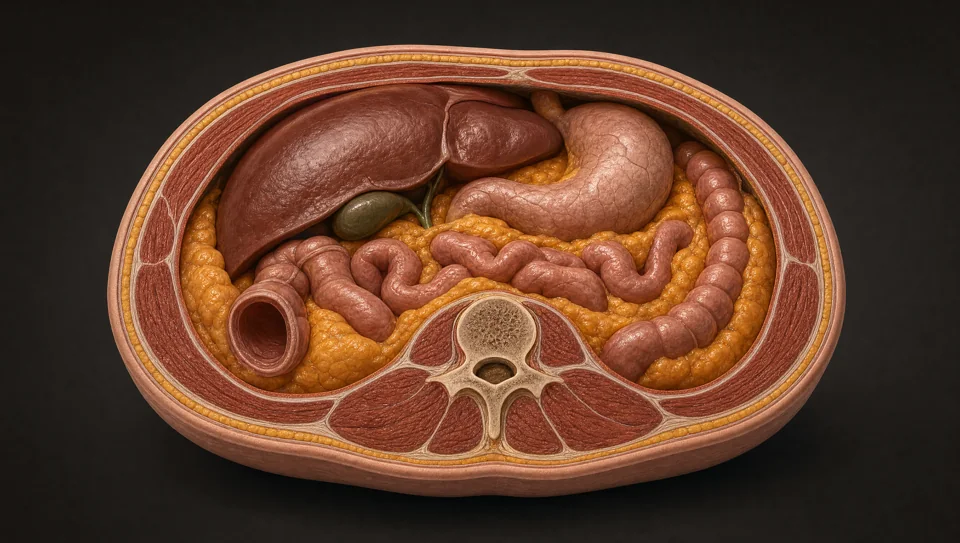
Subcutaneous fat lies under the skin; visceral fat is deeper, around abdominal organs. Both can contribute to waist size, but you cannot determine their proportions by pinching your stomach. Visceral fat is clinically relevant because of its association with metabolic risk—not because appearance can diagnose it.
Evidence behind this answer
Sources checked November 1, 2026: [1] NHLBI: BMI, waist measurements and their limits[2] Exercise and caloric restriction effects on visceral fat: randomized-trial meta-analysis[3] Updates on methods for body composition analysis, 2025
The anatomical difference
A skinfold contains skin and some underlying subcutaneous tissue. It does not reach the fat around internal organs. A person can have a relatively modest visible belly and still have important metabolic risk, while another person’s appearance may reflect a different distribution. This is why a photograph, clothing size or pinch test cannot replace an appropriate health assessment.
What waist size can tell you
Waist circumference is a practical indirect measure of abdominal size used alongside other information. It is not a direct measurement of visceral-fat volume. Interpretation depends on context, including body size and population differences. A change in waist can be useful without proving which specific tissue changed. Use the same measurement method when following a trend.
When imaging is different
CT and MRI can distinguish abdominal tissues in ways a tape measure cannot. That does not mean everyone concerned about belly fat needs a scan. Cost, clinical purpose, accessibility and—in the case of CT—radiation exposure belong in the decision. Imaging used in a research trial should not automatically become a consumer screening requirement.
How the distinction changes action
The useful response is to address metabolic health rather than pursue a cosmetic target as a medical diagnosis. Activity, nutrition and clinical management of relevant conditions remain central. Aesthetic changes and health changes overlap only partly. If an advertisement claims a product specifically melts visceral fat, ask for human evidence measuring that tissue, not photographs or overall weight changes.
Related questions
Is all belly fat visceral fat?
No. Abdominal size includes several tissues and other factors. The internal and under-skin fat compartments are different.
Can a tape measure replace an MRI?
No. It answers a simpler, indirect question. That can still be useful when interpreted appropriately.
Sources
General information, not an individual diagnosis or treatment plan. Product-specific approval, risks and eligibility must be checked against the current label and clinical assessment. How we publish · Report a correction