Visceral Fat Fieldguide · Answer guide
How to lose visceral fat: what helps beyond belly-fat promises
Regular physical activity and an eating pattern that supports sustainable weight management can reduce visceral fat. You cannot selectively burn the fat around abdominal organs with sit-ups, a cream or a “belly detox.” Waist measurements can help track overall risk, but they do not directly measure visceral fat.
Evidence behind this answer
Sources checked November 1, 2026: [1] Exercise and caloric restriction effects on visceral fat: randomized-trial meta-analysis[2] NHLBI: BMI, waist measurements and their limits[3] NIDDK: prescription medicines for weight management
Know which fat you are talking about
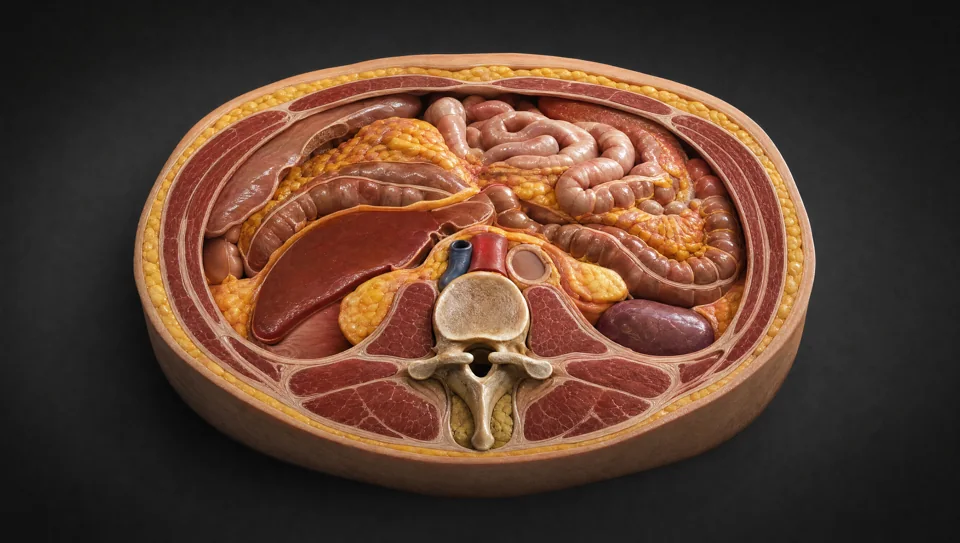
Visceral fat is inside the abdomen around organs. Subcutaneous fat sits under the skin. A visible belly can include both, along with anatomy, posture and other factors. Looking at a photograph cannot quantify the internal component. The reason clinicians care about visceral fat is its relationship with metabolic health, not whether someone has a flat stomach.
Exercise and food changes both have evidence
A randomized-trial meta-analysis found that exercise and caloric restriction can reduce visceral adipose tissue. That does not establish one identical plan for everyone. Aerobic activity, resistance work and eating changes can play complementary roles. Choose changes that preserve adequate nutrition and can be maintained; a dramatic short-term scale drop is not proof of superior visceral-fat loss. Clinical conditions and medications may change what is appropriate.
Why abdominal exercises are not a targeted treatment
Training the abdominal muscles can improve strength, but the location of a working muscle does not let you choose the nearby fat depot your body uses. Marketing that shows a workout beside a shrinking internal-fat graphic skips the evidence needed to support that claim. A broader activity and metabolic-health plan is more useful than endlessly increasing crunches.
Track a useful trend
A consistent waist measurement, fitness and appropriate clinical markers can provide useful context over time. Measure in the same way rather than reacting to daily fluctuations. If weight or waist reduction is not occurring, review the plan with a qualified professional rather than adding unproven fat burners. New abdominal swelling or pain is not something to self-diagnose as visceral fat.
Related questions
Can visceral fat decrease without a dramatic scale change?
Exercise studies can show changes in internal fat that a scale alone does not describe. Weight is not a direct map of fat distribution.
Do detox teas remove visceral fat?
They are not an established targeted treatment for fat around abdominal organs. Fluid or bowel changes should not be confused with fat loss.
Sources
General information, not an individual diagnosis or treatment plan. Product-specific approval, risks and eligibility must be checked against the current label and clinical assessment. How we publish · Report a correction